
Welcome to the Art section of MyEnglishPlace! Immerse yourself in articles about famous artworks and artists, followed by comprehension and conversation questions. Explore the world of art while enhancing your English skills. Join us as we delve into the beauty and history of renowned masterpieces together!

The Persistence of Memory- Salvador Dali
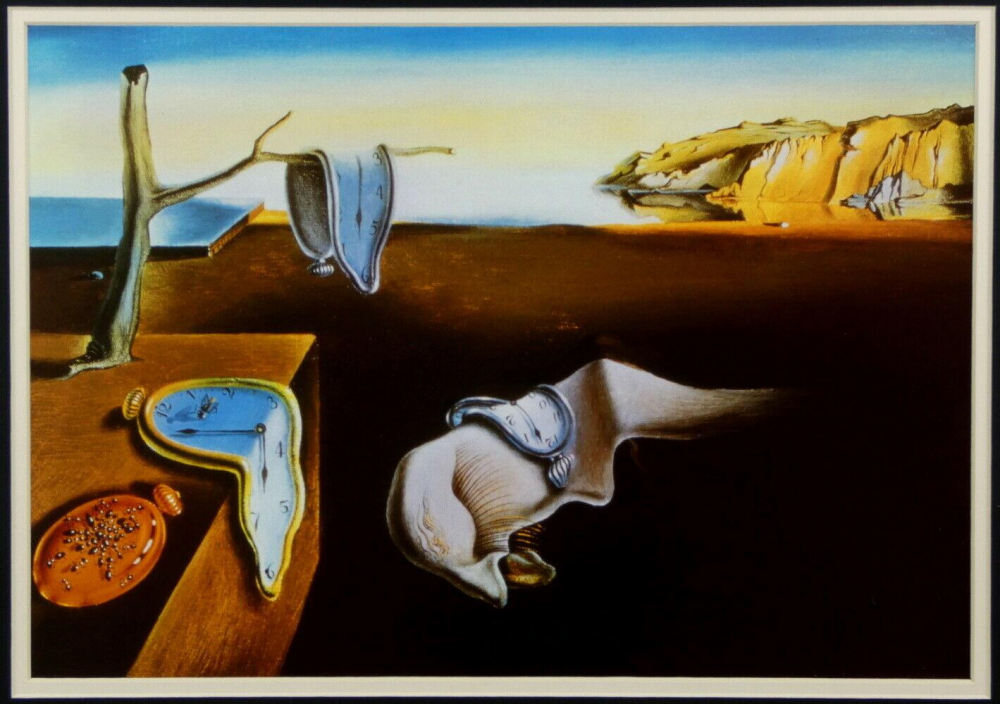
Article- Unlocking the Enigma of Salvador Dali’s “The Persistence of Memory”
Unlocking the Enigma of Salvador Dali’s “The Persistence of Memory”
Salvador Dali’s “The Persistence of Memory” is not just a painting; it’s a journey into the depths of the subconscious mind, a surreal landscape where time melts, and reality bends. Created in 1931 during the height of the surrealist movement, this masterpiece continues to captivate audiences with its enigmatic imagery and profound symbolism.
At first glance, the painting presents a dreamlike scene: a barren landscape with soft, melting clocks draped over various objects. A distorted face seems to emerge from the center, adding to the surreal ambiance. But what does it all mean? To unravel the mysteries of “The Persistence of Memory,” one must delve into the mind of its creator and the context of its creation.
Dali, known for his eccentricities and flamboyant personality, was deeply influenced by the works of Sigmund Freud and his theories on the unconscious mind. The melting clocks in the painting, often interpreted as symbols of the fluidity of time, may also represent Dali’s fascination with the concept of “softness” and the malleability of reality in dreams. Time, in Dali’s world, is not rigid but rather subjective and ever-changing.
Moreover, the barren landscape serves as a backdrop for Dali’s exploration of the subconscious. The rocky cliffs and desolate beach evoke a sense of isolation, mirroring the artist’s own feelings of alienation and introspection. The solitary figure in the distance adds to the sense of loneliness, hinting at Dali’s own struggles with identity and existential angst.
The most intriguing element of the painting is perhaps the distorted face at its center. Some have speculated that it represents Dali himself, his features twisted and contorted in a reflection of his inner turmoil. Others see it as a manifestation of the Freudian id, the primal urges and desires lurking beneath the surface of consciousness.
Yet, “The Persistence of Memory” defies simple interpretation. Its meaning is as elusive as the drooping clocks that populate its landscape. Dali himself remained cryptic about the painting’s significance, preferring to let viewers draw their own conclusions.
In addition to its psychological depth, the painting also contains subtle references to scientific theories of the time. The melting clocks, for example, may allude to Einstein’s theory of relativity, which challenged traditional notions of time and space. By incorporating elements of science into his surrealist imagery, Dali blurs the line between objective reality and subjective perception.
Nearly a century after its creation, “The Persistence of Memory” continues to fascinate and intrigue audiences around the world. Its timeless quality speaks to the universal themes of time, identity, and the human condition. Whether viewed as a meditation on the nature of reality or simply as a striking visual composition, Dali’s masterpiece remains an enduring symbol of artistic innovation and imagination.
In conclusion, Salvador Dali’s “The Persistence of Memory” invites viewers on a surreal journey into the depths of the subconscious mind. Through its melting clocks, barren landscape, and distorted figures, the painting challenges conventional notions of time, reality, and identity. Like a dream that lingers in the mind long after waking, Dali’s masterpiece continues to captivate and mystify, inviting us to explore the mysteries of the human psyche.
Vocabulary:
- Enigmatic: Something that is mysterious, puzzling, or difficult to understand.
- Profound: Having deep insight, wisdom, or significance.
- Barren: Describing land that is empty, lifeless, or lacking vegetation.
- Unravel: To solve or explain something that is complex or mysterious.
- Eccentricities: Unconventional or odd behaviors or qualities that deviate from the norm.
- Flamboyant: Displaying a bold, extravagant, or colorful style or personality.
- Rigid: Stiff, inflexible, or not easily bent or changed.
- Desolate: Empty, bleak, or deserted, often describing a place that lacks life or activity.
- Angst: A feeling of deep anxiety, apprehension, or existential dread.
- Turmoil: A state of confusion, disorder, or agitation.
- Lurking: Existing or hiding in a concealed or secretive manner.
- Drooping: Hanging or sagging downwards, often due to lack of support or strength.
- Allude: To suggest or indirectly reference something without explicitly mentioning it.
- Blurs: To obscure or make unclear, often by mixing or merging different elements.
- Lingers: To remain or stay in a place or situation for a prolonged period of time.
Reading Comprehension Questions:
- What is the title of the painting discussed in the article?
- How does Salvador Dali’s painting “The Persistence of Memory” challenge conventional notions of time?
- What are some interpretations of the melting clocks in the painting?
- What scientific theory is subtly referenced in the artwork?
- Why does the author describe the painting’s meaning as elusive?
Conversational Questions:
- Have you ever heard of Salvador Dali before? What do you know about him?
- What do you think the melting clocks in the painting might symbolize?
- Do you agree that art can have different interpretations for different people? Why or why not?
- How do you think Salvador Dali’s personal experiences influenced his artwork?
- If you could create a surreal painting like “The Persistence of Memory,” what elements would you include and why?
The Last Supper- Leonardo da Vinci

Article- Decoding Leonardo da Vinci’s Masterpiece: The Last Supper
Decoding Leonardo da Vinci’s Masterpiece: The Last Supper
Leonardo da Vinci’s “The Last Supper” stands as one of the most iconic and revered works of art in history. Painted between 1495 and 1498, this masterpiece adorns the walls of the refectory at the Convent of Santa Maria delle Grazie in Milan, Italy. Beyond its religious significance, the painting has captivated audiences for centuries with its intricate composition and rich symbolism.
Unlike Salvador Dali’s surrealist explorations, “The Last Supper” portrays a narrative deeply rooted in religious tradition. Depicting the moment when Jesus reveals that one of his disciples will betray him, the painting captures the emotional intensity of the scene with remarkable depth and realism.
At first glance, the composition appears simple: Jesus sits at the center of a long table surrounded by his twelve disciples. However, upon closer inspection, one discovers the meticulous attention to detail that Leonardo infused into every aspect of the painting.
The figures themselves are not static but seem to be engaged in dynamic conversation and reaction. Each disciple exhibits a unique expression and gesture, conveying a range of emotions from shock to disbelief to sorrow. Leonardo’s mastery of human anatomy and facial expression brings the characters to life, making the viewer feel as though they are witnessing the event firsthand.
But beyond the human drama, “The Last Supper” is laden with symbolic imagery that adds layers of meaning to the scene. The positioning of the figures, the use of light and shadow, and the subtle details hidden within the painting all contribute to its enigmatic allure.
For example, the placement of Judas Iscariot, the disciple who will ultimately betray Jesus, on the same side of the table as Jesus himself foreshadows his role in the events to come. His isolated posture and shadowed face hint at his inner turmoil and moral conflict.
Similarly, the architectural elements of the room, such as the intersecting lines of the ceiling and walls, create a sense of depth and perspective that draws the viewer into the scene. The use of linear perspective, a technique pioneered by Leonardo himself, adds to the illusion of three-dimensionality and spatial coherence.
Moreover, the painting’s rich symbolism extends beyond the biblical narrative to encompass broader themes of faith, redemption, and the human condition. The bread and wine on the table symbolize the Eucharist, a central sacrament in Christian theology, while the gestures and expressions of the disciples reflect the complexities of human nature and relationships.
In conclusion, Leonardo da Vinci’s “The Last Supper” is a masterpiece of religious art that transcends its historical context to resonate with audiences across generations. Through its meticulous composition, rich symbolism, and emotional depth, the painting invites viewers to contemplate the timeless themes of betrayal, sacrifice, and redemption. As a testament to Leonardo’s genius and artistic vision, “The Last Supper” remains a source of inspiration and fascination for art lovers around the world.
Vocabulary:
- Iconic: Widely recognized and admired, often representing a particular idea or symbol.
- Revere: To deeply respect or admire someone or something.
- Refectory: A room in a monastery or convent where meals are served.
- Narrative: A story or account of events, often with a particular theme or purpose.
- Intricate: Complex or detailed, with many interconnected parts.
- Meticulous: Showing great attention to detail; careful and precise.
- Static: Not moving or changing; stationary.
- Anatomy: The study of the structure and parts of living organisms, such as humans or animals.
- Foreshadow: To hint at or suggest something that will happen in the future.
- Enigmatic: Mysterious or difficult to understand.
- Allure: The quality of being attractive, charming, or captivating.
- Illusion: A false or misleading perception, often created by clever visual tricks or deception.
- Coherence: The quality of being logical, consistent, and making sense as a whole.
- Sacrament: A religious ceremony or ritual regarded as having spiritual significance.
- Resonate: To evoke a strong emotional response or connection; to be meaningful or relevant to someone.
Reading Comprehension Questions:
- Where is Leonardo da Vinci’s painting “The Last Supper” located?
- What event does “The Last Supper” depict?
- Describe the emotional expressions of the disciples in the painting.
- How does Leonardo use symbolism in the artwork?
- What technique did Leonardo pioneer that adds to the painting’s illusion of depth?
Conversational Questions:
- Have you ever seen or heard of Leonardo da Vinci’s painting “The Last Supper” before? What do you know about it?
- What emotions do you think the disciples might be feeling in the painting?
- Do you think religious art like “The Last Supper” still holds significance today? Why or why not?
- How do you think Leonardo da Vinci’s background as a scientist and inventor influenced his artwork?
- If you could ask Leonardo da Vinci one question about “The Last Supper,” what would it be?
The Scream- Edvard Munch
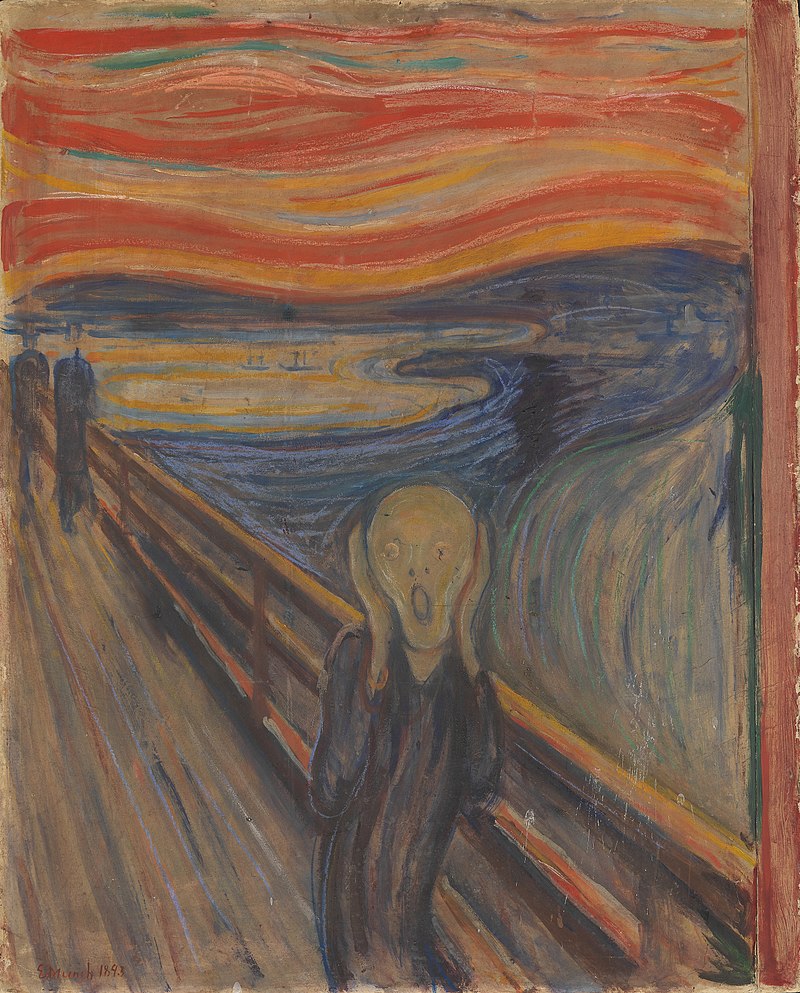
Article- The Haunting Expressionism of Edvard Munch’s “The Scream”
The Haunting Expressionism of Edvard Munch’s “The Scream”
Edvard Munch’s iconic painting, simply titled “The Scream,” is a haunting portrayal of existential anguish and despair. Created in 1893, this masterpiece of expressionism has become one of the most recognizable images in the history of art. Through its vivid colors, distorted figures, and emotive composition, “The Scream” evokes a visceral response from viewers, tapping into universal fears and anxieties.
At the heart of the painting is a solitary figure standing on a bridge, their face contorted in a silent scream of terror. The swirling sky above and the barren landscape below contribute to the sense of isolation and desolation. The figure’s elongated form and exaggerated features intensify the feeling of distress, as if the very essence of their being is being torn apart.
“The Scream” is often interpreted as a reflection of Munch’s own inner turmoil and psychological struggles. The artist experienced profound grief and anxiety throughout his life, stemming from the death of his mother when he was young, as well as his own battles with mental illness. In “The Scream,” Munch channels these personal demons into a powerful artistic statement, capturing the existential dread that haunts the human condition.
But beyond its autobiographical significance, “The Scream” resonates with viewers on a deeper level, tapping into universal themes of alienation, anxiety, and mortality. The figure’s face, devoid of individual features, becomes a symbol of everyman, representing the collective angst of humanity in the face of an uncertain and indifferent universe.
The painting’s expressionistic style, characterized by bold colors and exaggerated forms, heightens its emotional impact. The swirling lines and frenetic brushstrokes convey a sense of movement and instability, mirroring the tumultuous inner state of the figure. The use of vivid, unnatural colors adds to the sense of unease, as if reality itself is warped and distorted.
Despite its somber subject matter, “The Scream” exudes a certain beauty and power that transcends its bleak imagery. Its raw emotion and raw energy speak to the resilience of the human spirit in the face of adversity, offering a cathartic release for both the artist and the viewer.
In conclusion, Edvard Munch’s “The Scream” is a haunting masterpiece that continues to captivate and unsettle audiences more than a century after its creation. Through its evocative imagery and expressionistic style, the painting taps into the depths of the human psyche, confronting viewers with the existential anxieties that lie at the heart of the human experience. As a testament to the enduring power of art to provoke thought and emotion, “The Scream” remains a timeless symbol of human frailty and resilience.
Vocabulary:
- Haunting: Something that is deeply unsettling or unforgettable, often in a mysterious or eerie way.
- Existential: Relating to existence, particularly the individual’s experience of being in the world.
- Anguish: Extreme emotional pain or distress.
- Despair: A feeling of utter hopelessness or loss of faith.
- Expressionism: An artistic movement characterized by the expression of subjective emotions and experiences through bold and distorted forms.
- Visceral: Relating to deep emotional reactions or instincts, often felt strongly in the body.
- Distorted: Twisted or altered from its usual or natural shape or appearance.
- Elongated: Stretched or lengthened beyond normal proportions.
- Autobiographical: Relating to the author’s own life or experiences.
- Collective: Involving or shared by all members of a group.
- Indifferent: Showing no interest, concern, or emotion.
- Expressionistic: Pertaining to or characteristic of expressionism, an art movement focused on expressing emotion through distortion and exaggeration.
- Frenetic: Fast-paced, frantic, or chaotic.
- Cathartic: Providing emotional release or purification, often through experiencing intense emotions.
- Resilience: The ability to recover quickly from difficulties or adversity; toughness.
Reading Comprehension Questions:
- Who is the artist behind the painting “The Scream”?
- Describe the central figure in the painting and their expression.
- What themes does “The Scream” by Edvard Munch explore?
- How does the painting’s expressionistic style contribute to its emotional impact?
- What is the significance of the painting’s vivid colors and distorted forms?
Conversational Questions:
- Have you ever seen or heard of the painting “The Scream” by Edvard Munch before? What do you know about it?
- How does “The Scream” make you feel when you look at it? Why?
- Do you think the emotions expressed in “The Scream” are universal or personal to the artist? Why?
- How do you think the artist’s personal experiences might have influenced the creation of “The Scream”?
- If you could create your own version of “The Scream,” what emotions or themes would you want to express and why?
Guernica- Pablo Picasso
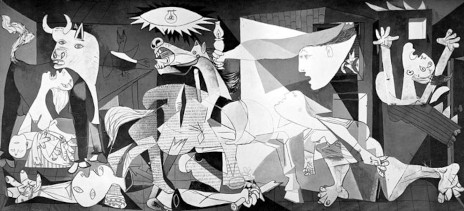
Article- Unveiling the Power and Protest in Pablo Picasso’s “Guernica”
Unveiling the Power and Protest in Pablo Picasso’s “Guernica”
Pablo Picasso’s “Guernica” stands as a towering monument of political art, a visceral condemnation of the horrors of war and the atrocities committed against innocent civilians. Created in response to the bombing of the Basque town of Guernica during the Spanish Civil War, this monumental painting has become a symbol of peace and resilience in the face of adversity.
Measuring over 11 feet tall and 25 feet wide, “Guernica” is an imposing work that demands attention and contemplation. Through its stark monochromatic palette and fragmented composition, Picasso captures the chaos and destruction of the bombing with raw intensity.
At the heart of the painting lies a central figure: a wailing woman cradling her dead child. Her anguished face and outstretched arms convey the agony and despair of the civilian victims caught in the crossfire of war. Surrounding her are scenes of chaos and suffering: buildings engulfed in flames, dismembered bodies, and terrified animals.
The figures in “Guernica” are distorted and deformed, their limbs twisted and contorted in a grotesque dance of pain and anguish. Picasso’s use of abstraction and symbolism heightens the emotional impact of the painting, inviting viewers to empathize with the victims and contemplate the senselessness of war.
Despite its somber subject matter, “Guernica” exudes a certain sense of hope and resilience. Amidst the chaos and destruction, there are glimpses of light and humanity: a defiant bull, a wounded horse, a flickering lamp. These symbols of endurance and resistance serve as reminders of the human capacity for survival and renewal, even in the darkest of times.
“Guernica” is not just a painting; it is a powerful call to action, a plea for peace and justice in a world torn apart by conflict. In the decades since its creation, the painting has inspired countless individuals and movements dedicated to promoting peace and human rights. It serves as a reminder of the importance of bearing witness to the atrocities of war and standing in solidarity with those who suffer its consequences.
In conclusion, Pablo Picasso’s “Guernica” is a masterful work of art that transcends its historical context to speak to the universal themes of war, suffering, and resilience. Through its haunting imagery and emotional depth, the painting continues to provoke thought and inspire action, reminding us of the power of art to bear witness to the human experience and advocate for a better world.
Vocabulary:
- Monumental: Very large, impressive, or significant in scale.
- Atrocities: Acts of extreme cruelty or violence.
- Resilience: The ability to recover quickly from difficulties or challenges.
- Contemplation: The act of deeply thinking about something.
- Visceral: Relating to deep emotional reactions or instincts.
- Condemnation: Strong disapproval or criticism.
- Imposing: Having a commanding presence or appearance.
- Monochromatic: Consisting of or using only one color or shades of one color.
- Agony: Extreme physical or mental pain.
- Grotesque: Distorted or unnatural in shape, appearance, or character.
- Abstraction: The quality of being difficult to understand or interpret.
- Symbolism: The use of symbols to represent ideas or concepts.
- Senselessness: The lack of meaning, purpose, or rationality.
- Defiant: Boldly resistant or challenging, especially to authority or convention.
- Solidarity: Unity or mutual support within a group, especially during difficult times.
Reading Comprehension Questions:
- What event inspired Pablo Picasso to create the painting “Guernica”?
- Describe some of the scenes depicted in “Guernica” by Pablo Picasso.
- How does Picasso convey the emotions of the victims in “Guernica”?
- What symbols of hope and resilience can be found in the painting?
- What message does “Guernica” convey about the impact of war?
Conversational Questions:
- Have you ever seen or heard of Pablo Picasso’s painting “Guernica” before? What do you know about it?
- How does “Guernica” make you feel when you look at it? Why?
- Do you think art has the power to influence political change? Why or why not?
- What do you think Pablo Picasso was trying to convey through “Guernica”?
- If you could meet Pablo Picasso, what would you ask him about his painting “Guernica”?
The Kiss– Gustav Klimt

Article- Exploring Elegance and Passion in Gustav Klimt’s “The Kiss”
Exploring Elegance and Passion in Gustav Klimt’s “The Kiss”
Gustav Klimt’s “The Kiss” is a masterpiece of art nouveau, a mesmerizing depiction of love and intimacy that continues to captivate viewers with its exquisite beauty and symbolism. Created between 1907 and 1908, this iconic painting is renowned for its intricate patterns, sumptuous colors, and sensual subject matter.
At the center of the painting stands a couple locked in a tender embrace, their bodies intertwined in a passionate kiss. The man, depicted in a robe adorned with geometric shapes and swirling patterns, cradles the woman in his arms as she leans back into his embrace. Their figures are surrounded by a shimmering golden aura, as if bathed in the warmth of their love.
“The Kiss” is a celebration of romantic love and human connection, a timeless expression of the joys and complexities of relationships. Klimt’s use of vibrant colors and luxurious materials adds to the sensuality of the scene, inviting viewers to immerse themselves in the embrace of the lovers.
But beyond its surface beauty, “The Kiss” is rich in symbolism and meaning. The intertwining patterns that adorn the figures’ clothing and the background of the painting are reminiscent of the art nouveau style, with its emphasis on organic forms and decorative elements. These intricate designs suggest the interconnectedness of all things, reflecting the harmony and unity of the lovers’ bond.
Moreover, the golden hue that permeates the painting is a symbol of divine love and spiritual enlightenment. In many cultures, gold represents purity, prosperity, and the divine, imbuing “The Kiss” with a sense of transcendence and sacredness.
“The Kiss” is also a reflection of Klimt’s own artistic vision and personal beliefs. As a prominent member of the Vienna Secession, a movement that sought to break free from traditional artistic conventions, Klimt embraced themes of sensuality and symbolism in his work. “The Kiss” exemplifies his commitment to exploring the depths of human experience through art, transcending the boundaries of time and culture.
In conclusion, Gustav Klimt’s “The Kiss” is a masterpiece of art nouveau that continues to enchant and inspire audiences with its elegance, passion, and symbolism. Through its exquisite craftsmanship and emotive subject matter, the painting invites viewers to contemplate the beauty and complexity of love, while offering a glimpse into the artist’s own creative vision and spiritual beliefs. As a timeless symbol of romance and connection, “The Kiss” remains a testament to the enduring power of art to evoke emotion and transcend the limitations of the human experience.
Vocabulary:
- Elegance: Graceful and stylish beauty or refinement.
- Passion: Strong and intense emotion, often associated with love or desire.
- Mesmerizing: Holding the attention of someone in a captivating or hypnotic manner.
- Exquisite: Extremely beautiful, delicate, or finely crafted.
- Symbolism: The use of symbols to represent ideas, concepts, or emotions.
- Renowned: Widely known and esteemed for excellence or achievement.
- Intricate: Complex and detailed, with many interconnected parts.
- Sensual: Relating to the senses or physical pleasure, often in a romantic or intimate context.
- Sumptuous: Luxuriously rich or lavish in appearance, texture, or flavor.
- Immersed: Deeply involved or absorbed in something.
- Embrace: To hold someone closely in one’s arms, often as a sign of affection or support.
- Harmony: A pleasing arrangement or combination of elements, often resulting in a sense of balance or unity.
- Transcendence: The state of being beyond or above the ordinary limits of human experience.
- Sacredness: The quality of being holy, divine, or deserving of reverence or respect.
- Conventions: Established customs, practices, or standards widely accepted within a particular society or culture.
Reading Comprehension Questions:
- What is the title of the painting discussed in the article?
- Describe the central figures depicted in “The Kiss” by Gustav Klimt.
- What are some of the symbolic elements in the painting?
- How does the article describe Gustav Klimt’s artistic style?
- What themes does “The Kiss” explore?
Conversational Questions:
- Have you ever seen or heard of Gustav Klimt’s painting “The Kiss” before? What do you know about it?
- How does “The Kiss” make you feel when you look at it? Why?
- What do you think are some reasons why “The Kiss” is considered a masterpiece?
- Do you think the symbolism in “The Kiss” adds to its beauty? Why or why not?
- If you could meet Gustav Klimt, what would you ask him about his painting “The Kiss”?
The Thinker– Auguste Rodin
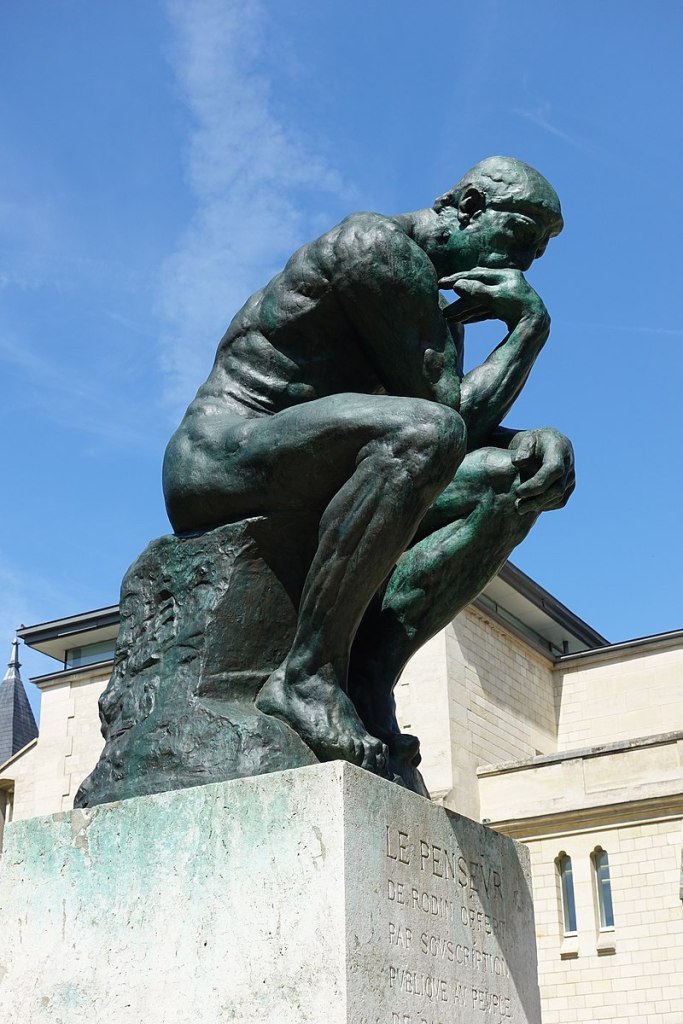
Article- Delving into the Contemplative Masterpiece: Auguste Rodin’s “The Thinker”
Delving into the Contemplative Masterpiece: Auguste Rodin’s “The Thinker”
Auguste Rodin’s iconic sculpture, “The Thinker,” stands as a timeless symbol of introspection and intellectual inquiry. Created between 1880 and 1882, this magnificent work of art has captured the imagination of viewers for generations with its powerful portrayal of the human intellect and spirit.
At the heart of “The Thinker” is a solitary figure seated on a rock, deep in thought. With his chin resting on his hand and his brow furrowed in concentration, the figure exudes an aura of contemplation and introspection. His muscular form and powerful stance suggest a mind engaged in profound philosophical inquiry.
“The Thinker” is often interpreted as a representation of Dante Alighieri, the Italian poet and author of the Divine Comedy, contemplating the depths of Hell. However, Rodin intended the sculpture to be a universal symbol of the human intellect, capable of grappling with the complexities of existence and the mysteries of the universe.
One of the most striking aspects of “The Thinker” is its sense of movement and dynamism. Despite being cast in bronze, the figure appears to be alive, as if frozen in the midst of a moment of deep reflection. This dynamic quality is characteristic of Rodin’s artistic style, which sought to capture the vitality and energy of the human form.
“The Thinker” is also notable for its attention to detail and realism. Every muscle and sinew is meticulously rendered, conveying a sense of physical and psychological depth. The figure’s expression is ambiguous, allowing viewers to project their own thoughts and emotions onto the sculpture.
Beyond its aesthetic beauty, “The Thinker” is a profound meditation on the human condition. It invites viewers to contemplate the nature of existence, the passage of time, and the meaning of life itself. In a world filled with noise and distraction, “The Thinker” serves as a reminder of the importance of quiet reflection and deep introspection.
In conclusion, Auguste Rodin’s “The Thinker” is a masterpiece of sculpture that transcends its time and place to speak to the universal themes of human existence. Through its powerful portrayal of the contemplative spirit, the sculpture invites viewers to engage in a dialogue with themselves and with the world around them. As a timeless symbol of intellectual inquiry and philosophical reflection, “The Thinker” continues to inspire and provoke thought in all who encounter it.
Vocabulary:
- Contemplative: Deeply thoughtful or reflective.
- Intellect: The faculty of reasoning, understanding, and thinking logically.
- Inquire: To seek information or knowledge by asking questions.
- Profound: Having deep insight, wisdom, or significance.
- Aura: A distinctive atmosphere or feeling that surrounds something or someone.
- Universal: Pertaining to or affecting all people or things in the world.
- Dynamic: Characterized by constant change, activity, or progress.
- Meticulously: With great attention to detail and thoroughness.
- Ambiguous: Having more than one possible interpretation or meaning.
- Aesthetic: Concerned with beauty or the appreciation of beauty.
- Meditation: The act of engaging in deep thought or reflection.
- Provoke: To stimulate or incite a reaction, often a strong emotional response.
- Dialogue: A conversation or exchange of ideas between two or more people.
- Encounter: To come across or meet someone or something unexpectedly.
- Vitality: Energy, vigor, or liveliness; the state of being full of life.
Reading Comprehension Questions:
- What is the title of the sculpture discussed in the article?
- How is the figure depicted in “The Thinker” described?
- What is one interpretation of the sculpture’s meaning?
- How does the article describe the sculpture’s sense of movement?
- What themes does “The Thinker” explore?
Conversational Questions:
- Have you ever seen or heard of Auguste Rodin’s sculpture “The Thinker” before? What do you know about it?
- How does “The Thinker” make you feel when you look at it? Why?
- What do you think the figure in “The Thinker” might be contemplating?
- Do you believe that art, like “The Thinker,” can inspire deep thought and reflection? Why or why not?
- If you could ask Auguste Rodin one question about his sculpture “The Thinker,” what would it be?
The Great Wave off Kanagawa– Katsushika Hokusai

Article- The Majestic Power and Timeless Beauty of Hokusai’s “The Great Wave off Kanagawa”
The Majestic Power and Timeless Beauty of Hokusai’s “The Great Wave off Kanagawa”
Katsushika Hokusai’s “The Great Wave off Kanagawa” stands as an enduring masterpiece of Japanese art, capturing the raw power and sublime beauty of nature in a single iconic image. Created as part of his series “Thirty-six Views of Mount Fuji,” this woodblock print has become one of the most recognized and celebrated works of art in the world.
At the center of the composition is a towering wave, its crest arcing high above a distant mountain peak. Beneath the wave, fragile boats struggle against the churning waters, dwarfed by the immense power of the ocean. In the foreground, a single, solitary figure clings to the side of a boat, gazing up at the towering wave with a mixture of awe and fear.
“The Great Wave off Kanagawa” is more than just a representation of a natural phenomenon; it is a meditation on the sublime, the awe-inspiring force of nature that evokes feelings of both terror and wonder. Hokusai’s masterful use of line, shape, and color imbues the image with a sense of dynamism and energy, as if the wave itself is alive and in motion.
One of the most striking features of “The Great Wave off Kanagawa” is its depiction of Mount Fuji in the background. Towering majestically above the surrounding landscape, the mountain serves as a symbol of permanence and resilience in the face of the ever-changing forces of nature. Its presence adds depth and balance to the composition, anchoring the tumultuous waves in a timeless, eternal landscape.
Despite its traditional Japanese subject matter, “The Great Wave off Kanagawa” has resonated with audiences around the world, inspiring countless artists, writers, and filmmakers across cultures and generations. Its universal themes of struggle, perseverance, and the inexorable passage of time speak to the human experience in a profound and meaningful way.
In conclusion, Katsushika Hokusai’s “The Great Wave off Kanagawa” is a testament to the enduring power and beauty of nature, as well as the limitless creativity of the human spirit. Through his masterful craftsmanship and artistic vision, Hokusai has created a work of art that transcends time and culture, inviting viewers to contemplate the majesty and mystery of the natural world. As a symbol of the sublime, “The Great Wave off Kanagawa” continues to inspire awe and wonder in all who behold it.
Vocabulary:
- Majestic: Having impressive beauty or dignity.
- Enduring: Lasting for a long time; continuing without change.
- Sublime: Inspiring awe, admiration, or wonder due to its beauty or grandeur.
- Phenomenon: A remarkable event or occurrence, especially one that is observed and studied.
- Meditation: Deep contemplation or reflection, often focusing on spiritual or philosophical matters.
- Masterpiece: A work of outstanding artistry, skill, or creativity.
- Awe-inspiring: Evoking a feeling of reverence, respect, or admiration due to its grandeur or magnificence.
- Dynamism: The quality of being dynamic or energetic; characterized by constant change or activity.
- Resilience: The ability to recover quickly from difficulties or setbacks.
- Anchoring: Providing stability or support, often by serving as a central or grounding element.
- Tumultuous: Characterized by chaos, disorder, or upheaval.
- Inexorable: Impossible to stop or prevent; relentless.
- Profound: Having deep insight, wisdom, or significance.
- Creativity: The ability to produce new and valuable ideas, solutions, or works of art.
- Transcend: To go beyond or rise above the limits of something, often in a spiritual or philosophical context.
Reading Comprehension Questions:
- What is the title of the artwork discussed in the article?
- What is the central subject depicted in “The Great Wave off Kanagawa”?
- How does the article describe the wave in the painting?
- What role does Mount Fuji play in the composition of the artwork?
- How does the article characterize the global impact of “The Great Wave off Kanagawa”?
Conversational Questions:
- Have you ever seen or heard of “The Great Wave off Kanagawa” by Katsushika Hokusai before? What do you know about it?
- How does “The Great Wave off Kanagawa” make you feel when you look at it? Why?
- What do you think inspired Katsushika Hokusai to create “The Great Wave off Kanagawa”?
- How do you interpret the symbolism of Mount Fuji in the painting?
- If you could visit Japan, would you like to see the real Mount Fuji? Why or why not?
Campbell’s Soup Cans– Andy Warhol

Article- Decoding Andy Warhol’s Iconic “Campbell’s Soup Cans”
Decoding Andy Warhol’s Iconic “Campbell’s Soup Cans”
Andy Warhol’s “Campbell’s Soup Cans” is not just a series of paintings; it is a cultural phenomenon that revolutionized the art world and challenged traditional notions of artistic value and subject matter. Created in 1962, this groundbreaking series of 32 canvases has become one of the most iconic symbols of pop art and consumer culture.
At first glance, “Campbell’s Soup Cans” appears deceptively simple: 32 canvases, each depicting a different variety of Campbell’s soup. However, upon closer inspection, the series reveals layers of meaning and commentary on mass production, consumerism, and the commodification of art.
Warhol’s decision to depict everyday objects like soup cans was a deliberate departure from the abstract expressionism that dominated the art world at the time. By elevating mundane objects to the status of art, Warhol challenged the notion of what could be considered worthy of artistic representation.
Each canvas in the series is meticulously painted with crisp lines and vibrant colors, replicating the packaging of Campbell’s soup down to the smallest detail. The repetition of the soup cans across multiple canvases creates a sense of uniformity and sameness, reflecting the mass production techniques of consumer culture.
But beyond their surface appearance, the soup cans in Warhol’s series are imbued with symbolic significance. Each can represents a different flavor or variety, suggesting the diversity and abundance of choices available to consumers in the modern world. Yet, at the same time, they also represent the homogenization and standardization of taste and identity that accompanies mass production.
“Campbell’s Soup Cans” is often interpreted as a commentary on the democratization of art and the blurring of the boundaries between high and low culture. By elevating a mass-produced consumer product to the realm of fine art, Warhol challenged the elitism of the art world and democratized access to art for a broader audience.
In conclusion, Andy Warhol’s “Campbell’s Soup Cans” is a groundbreaking work of art that continues to provoke thought and discussion more than half a century after its creation. Through its bold aesthetic and provocative subject matter, the series challenges viewers to reconsider their assumptions about art, consumerism, and the nature of creativity. As a symbol of the pop art movement, “Campbell’s Soup Cans” remains a testament to Warhol’s enduring influence and his ability to capture the spirit of his time.
Vocabulary:
- Iconic: Widely recognized and admired, often representing a particular idea or symbol.
- Phenomenon: A remarkable event or occurrence, especially one that is observed and studied.
- Revolutionized: To bring about a fundamental change or innovation in something.
- Subject matter: The topic or theme depicted in a work of art or literature.
- Consumerism: The preoccupation with acquiring and consuming goods and services.
- Deliberate: Done consciously and intentionally, often after careful consideration.
- Departure: A deviation or divergence from the norm or usual course of action.
- Mundane: Ordinary, commonplace, or lacking excitement or interest.
- Elevating: To raise to a higher position or status, often metaphorically.
- Homogenization: The process of making things uniform or similar in nature or character.
- Standardization: The process of establishing a standard or uniform level of quality, quantity, or performance.
- Democratization: The process of making something accessible to a broader audience or group of people.
- Elitism: The belief in or practice of favoring a select group of people based on perceived superiority or privilege.
- Provocative: Intended to stimulate thought or reaction; challenging or controversial.
- Aesthetic: Concerned with beauty or the appreciation of beauty.
Reading Comprehension Questions:
- What is the title of the artwork discussed in the article?
- Describe the subject matter of Andy Warhol’s “Campbell’s Soup Cans” series.
- How did Warhol challenge traditional notions of art with this series?
- What symbolic significance do the soup cans hold in the artwork?
- What broader themes does “Campbell’s Soup Cans” explore?
Conversational Questions:
- Have you ever seen or heard of Andy Warhol’s “Campbell’s Soup Cans” before? What do you know about it?
- How do you think Warhol’s “Campbell’s Soup Cans” series impacted the art world?
- What do you think Warhol was trying to convey by painting everyday objects like soup cans?
- Do you think it’s important for artists to challenge traditional notions of art? Why or why not?
- If you could create your own artwork inspired by everyday objects, what would you choose and why?
Water Lilies series- Claude Monet
Article- Exploring Tranquility and Light in Claude Monet’s Water Lilies Series
Exploring Tranquility and Light in Claude Monet’s Water Lilies Series
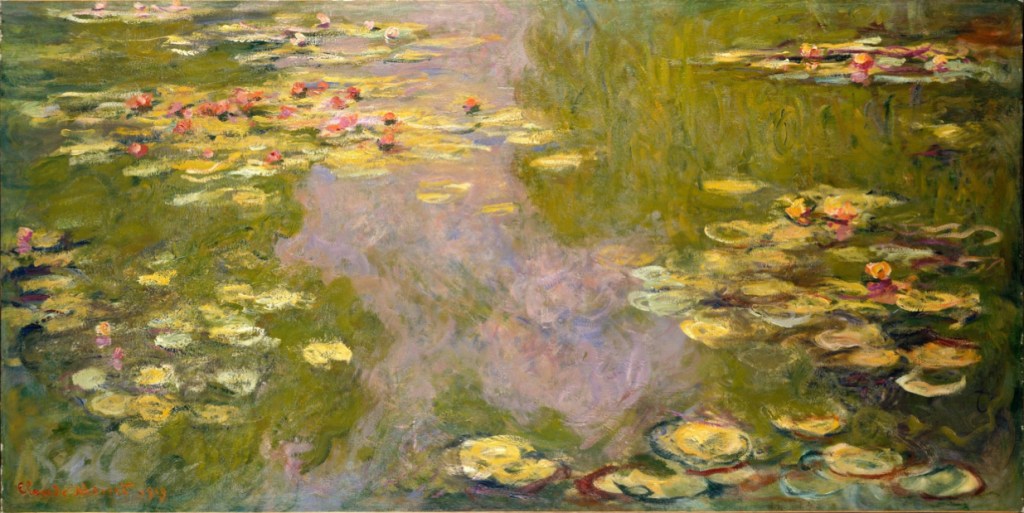
Claude Monet’s Water Lilies series stands as a testament to the artist’s unparalleled ability to capture the ephemeral beauty of nature and the ever-changing play of light on water. Created between 1899 and 1926, these exquisite paintings depict Monet’s beloved water garden at his home in Giverny, France, and have become some of the most cherished and iconic works of art in the world.
At the heart of the Water Lilies series are scenes of serene ponds filled with lush vegetation and delicate water lilies, their vibrant colors shimmering in the dappled sunlight. Monet’s loose, expressive brushstrokes and his use of vibrant hues create a sense of movement and vitality, as if the paintings themselves are alive with the energy of nature.
What sets the Water Lilies series apart is Monet’s innovative approach to capturing the fleeting effects of light and atmosphere. By painting the same scene at different times of the day and in various weather conditions, Monet was able to convey the ever-changing nature of his surroundings and the ephemeral quality of light.
In many of the paintings, the water lilies themselves become the focal point, their delicate petals floating serenely on the surface of the water. Monet’s keen observation of nature is evident in the way he captures the play of light and shadow on the petals, as well as the subtle reflections and ripples in the water.
But beyond their visual beauty, the Water Lilies series is also a reflection of Monet’s own inner world. As he aged and his eyesight began to fail, Monet became increasingly fascinated by the interplay of light and color, and his paintings took on a more abstract and introspective quality. The Water Lilies series, with its emphasis on form, color, and mood, is a testament to Monet’s lifelong exploration of the mysteries of nature and the human experience.
In conclusion, Claude Monet’s Water Lilies series is a masterpiece of impressionist art that continues to captivate and inspire audiences with its beauty and innovation. Through his masterful use of color, light, and texture, Monet invites viewers to immerse themselves in the tranquil beauty of his water garden and experience a moment of peace and reflection in a chaotic world. As a celebration of the wonders of nature and the power of art to transcend the ordinary, the Water Lilies series remains a timeless treasure that will endure for generations to come.
Vocabulary:
- Tranquility: A state of calmness, serenity, and peacefulness.
- Ephemeral: Lasting for only a short period of time; fleeting or temporary.
- Play of light: The way light interacts with objects, creating patterns, shadows, and highlights.
- Vibrant: Full of energy, vitality, and brightness.
- Lush: Abundant and rich in growth, often referring to vegetation.
- Dappled: Marked with spots or patches of light and shade.
- Expressive: Conveying emotion or meaning through gesture, movement, or appearance.
- Hues: Colors or shades, especially as they vary or blend together.
- Evident: Clearly seen, understood, or perceived; obvious.
- Introspective: Inward-looking; characterized by deep contemplation or reflection.
- Abstraction: The process of simplifying or distorting reality in art, often to convey a deeper meaning or emotion.
- Masterful: Showing exceptional skill, proficiency, or expertise.
- Immersion: Deep involvement or absorption in something, often to the point of becoming fully engaged or absorbed in it.
- Captivate: To attract and hold the interest or attention of someone.
- Endure: To last or remain in existence over a period of time; to withstand hardship or adversity.
Reading Comprehension Questions:
- What is the subject of Claude Monet’s Water Lilies series?
- Describe Monet’s artistic approach to capturing light and atmosphere in the paintings.
- What is the significance of the water lilies in the artwork?
- How did Monet’s artistic style change as he aged?
- What message or feeling do the Water Lilies series convey to viewers?
Conversational Questions:
- Have you ever seen any of Claude Monet’s Water Lilies paintings? What did you think of them?
- How do you think Monet’s paintings capture the beauty of nature?
- Do you have a favorite painting from the Water Lilies series? Why or why not?
- What emotions do you feel when you look at paintings of nature, like Monet’s Water Lilies?
- If you could visit Monet’s water garden in Giverny, France, what would you want to see or experience there?
Whistler’s Mother– James McNeill Whistler

Article- Unraveling the Subtle Beauty of Whistler’s “Arrangement in Grey and Black No. 1”
Unraveling the Subtle Beauty of Whistler’s “Arrangement in Grey and Black No. 1”
James McNeill Whistler’s iconic painting, “Arrangement in Grey and Black No. 1,” more commonly known as “Whistler’s Mother,” is a masterpiece of subtle beauty and quiet dignity. Created in 1871, this portrait has become one of the most recognizable and celebrated works of American art.
At the center of the painting sits Whistler’s mother, Anna McNeill Whistler, in a simple wooden chair. Dressed in dark clothing and a white bonnet, she exudes a sense of quiet resolve and stoicism. Her hands rest calmly in her lap, and her gaze is fixed ahead, her expression serene and contemplative.
The composition of “Whistler’s Mother” is marked by its simplicity and restraint. The figure of Whistler’s mother occupies the center of the canvas, surrounded by muted tones of grey and black. The background is sparse, with only a hint of a curtain draped behind her, allowing the viewer to focus entirely on the subject.
Whistler’s use of color and light in the painting is masterful, creating a sense of depth and atmosphere. The subtle variations in tone and texture give the portrait a sense of depth and dimension, while the soft, diffused light illuminates the figure with a gentle glow.
But perhaps the most striking aspect of “Whistler’s Mother” is the emotional resonance it evokes. Despite its quiet simplicity, the painting conveys a sense of profound emotion and depth. Through his careful attention to detail and his sensitivity to the nuances of expression, Whistler captures the essence of his mother’s character and personality.
“Whistler’s Mother” is not just a portrait; it is a tribute to the universal bond between mother and child, as well as a meditation on the passage of time and the complexities of human relationships. It speaks to the timeless themes of love, loss, and the enduring power of family.
In conclusion, James McNeill Whistler’s “Whistler’s Mother” is a masterpiece of American art that continues to captivate and inspire viewers with its subtle beauty and emotional depth. Through his sensitive portrayal of his mother, Whistler invites us to contemplate the quiet strength and dignity of the human spirit, as well as the profound bonds that unite us all. As a symbol of maternal love and the enduring power of art to touch the heart, “Whistler’s Mother” remains a timeless treasure that will endure for generations to come.
Vocabulary:
- Subtle: Not obvious or easily noticed; delicate or understated.
- Dignity: The quality of being worthy of respect or honor; poise and self-respect.
- Stoicism: The endurance of pain or hardship without complaint; the philosophy of enduring hardship with courage and self-control.
- Serene: Calm, peaceful, and untroubled.
- Contemplative: Deeply thoughtful or reflective; engaged in quiet and careful consideration.
- Restraint: The act of holding back, controlling, or limiting oneself; moderation or self-discipline.
- Muted: Subdued or softened in tone, color, or intensity.
- Masterful: Displaying exceptional skill, expertise, or proficiency.
- Diffused: Spread out or scattered over a wide area; not concentrated or focused.
- Nuances: Subtle variations or distinctions in meaning, expression, or appearance.
- Resonance: The quality of evoking a strong emotional response or sense of familiarity.
- Bond: A close connection or relationship between people; a strong emotional tie.
- Tribute: An act, statement, or gift that is intended to show gratitude, admiration, or respect.
- Meditation: Deep contemplation or reflection, often focused on spiritual or philosophical matters.
- Enduring: Lasting for a long time; continuing without change or fading.
Reading Comprehension Questions:
- What is the title of the painting discussed in the article?
- Who is the subject of the painting “Whistler’s Mother”?
- How does the article describe the composition of the painting?
- What emotions does the painting evoke in viewers?
- What themes does “Whistler’s Mother” explore?
Conversational Questions:
- Have you ever seen the painting “Whistler’s Mother” by James McNeill Whistler? What did you think of it?
- How does the artist portray the subject’s emotions in the painting?
- What do you think is the significance of the simple composition in “Whistler’s Mother”?
- Do you have any personal connections to the themes portrayed in the painting? If so, what are they?
- If you could ask James McNeill Whistler one question about “Whistler’s Mother,” what would it be?
The Night Watch– Rembrandt van Rijn

Article- Unraveling the Dramatic Narrative of Rembrandt’s “The Night Watch”
Unraveling the Dramatic Narrative of Rembrandt’s “The Night Watch”
Rembrandt van Rijn’s “The Night Watch” is a masterpiece of Dutch Golden Age painting that captivates viewers with its dynamic composition and rich narrative detail. Created in 1642, this monumental work of art has long been revered as one of Rembrandt’s greatest achievements and a pinnacle of Baroque painting.
At the center of “The Night Watch” stands Captain Frans Banning Cocq, flanked by his lieutenant and a group of armed men. They are depicted in a dramatic moment, seemingly preparing to embark on a military mission. Rembrandt’s masterful use of light and shadow creates a sense of movement and drama, as if the figures are emerging from the darkness into the light.
One of the most striking aspects of “The Night Watch” is its sense of depth and perspective. Rembrandt skillfully positions the figures within the composition to create a sense of three-dimensional space, drawing the viewer’s eye deeper into the scene. The use of chiaroscuro, or the contrast between light and dark, further enhances the sense of drama and atmosphere.
But beyond its technical brilliance, “The Night Watch” is also a richly layered narrative that invites viewers to unravel its mysteries. Each figure in the painting has a story to tell, from the proud captain at the center to the young girl in the background, holding a chicken as a symbol of the company’s mascot.
The title “The Night Watch” is somewhat misleading, as the painting does not depict a nighttime scene. Instead, it refers to the civic guard militia that the figures belong to, who were responsible for maintaining order and defending the city of Amsterdam. Rembrandt’s decision to depict the militia in action was a departure from traditional portraiture, which typically depicted the guards in a more formal and static pose.
“The Night Watch” is often hailed as a triumph of storytelling in art, as Rembrandt’s masterful composition and attention to detail imbue the painting with a sense of narrative drama and intrigue. From the proud captain to the young drummer boy, each figure in the painting adds to the overall sense of energy and excitement, inviting viewers to imagine the events that led up to this dramatic moment.
In conclusion, Rembrandt van Rijn’s “The Night Watch” is a timeless masterpiece that continues to captivate and inspire viewers with its rich narrative detail and dramatic intensity. Through his skillful use of composition, light, and shadow, Rembrandt invites us to step into the world of 17th-century Amsterdam and witness the excitement and energy of the civic guard militia in action. As a testament to Rembrandt’s genius as a storyteller and painter, “The Night Watch” remains a treasure of the art world and a symbol of the enduring power of narrative in visual art.
Vocabulary:
- Captivates: Holds the attention or interest of someone.
- Dynamic: Full of energy, action, or change.
- Narrative: A story or account of events, experiences, or incidents.
- Monumental: Very large or impressive in size, extent, or importance.
- Baroque: A style of art and architecture characterized by ornate detail and dramatic effects.
- Flanked: Positioned on either side of something.
- Chiaroscuro: The use of strong contrasts between light and dark in art.
- Perspective: The technique or art of representing three-dimensional objects on a two-dimensional surface to create the illusion of depth.
- Intrigue: Arouses curiosity or interest by unusual, fascinating, or mysterious qualities.
- Civic: Relating to a city or municipality.
- Militia: A military force composed of ordinary citizens rather than professional soldiers.
- Portraiture: The art of creating portraits, especially of people.
- Departure: A deviation or divergence from the norm or usual course of action.
- Triumph: A great victory or achievement; a notable success.
- Intensity: The quality or state of being intense, extreme, or concentrated.
Reading Comprehension Questions:
- Who is the central figure depicted in Rembrandt’s “The Night Watch”?
- How does Rembrandt create a sense of depth and perspective in the painting?
- What is the title “The Night Watch” referring to?
- What is notable about the composition of “The Night Watch” compared to traditional portraiture?
- How does the article describe the narrative richness of the painting?
Conversational Questions:
- Have you ever seen Rembrandt’s painting “The Night Watch”? What did you think of it?
- What emotions or feelings do you think Rembrandt intended to convey in “The Night Watch”?
- If you were to guess, what do you think the figures in the painting might be preparing to do?
- How do you think Rembrandt’s use of light and shadow enhances the drama of the painting?
- If you could step into the scene depicted in “The Night Watch,” what would you do or say?
American Gothic– Grant Wood
Article- Exploring the Symbolism of Grant Wood’s “American Gothic”
Exploring the Symbolism of Grant Wood’s “American Gothic”
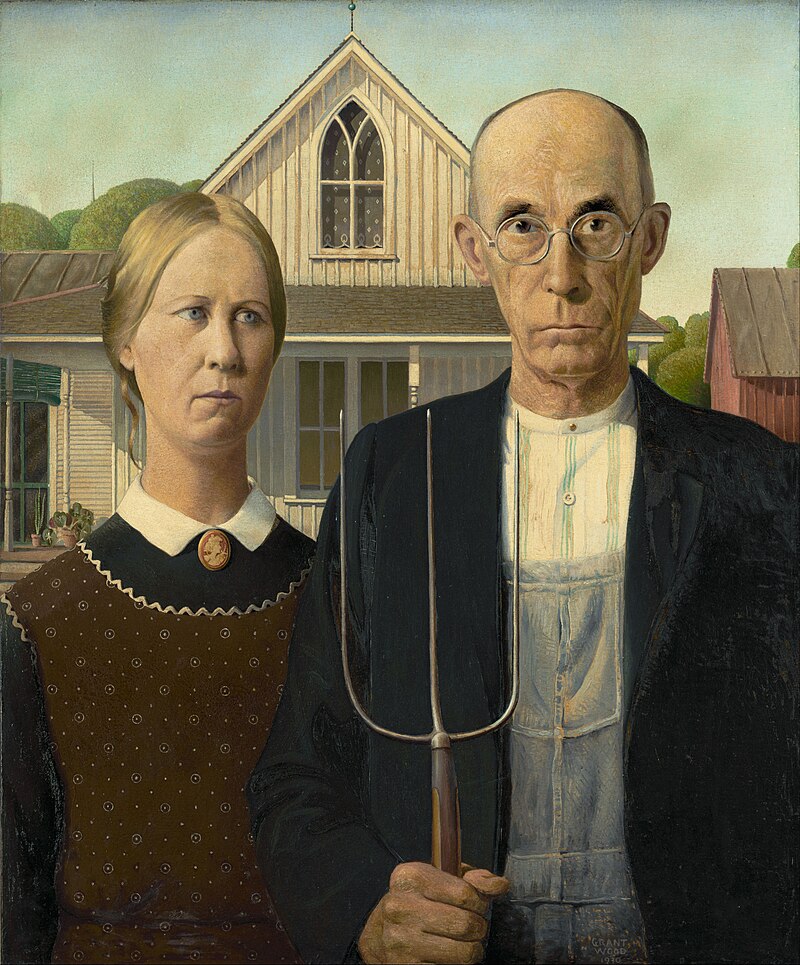
Grant Wood’s iconic painting, “American Gothic,” has become one of the most recognizable images in American art, symbolizing the values and identity of rural America during the Great Depression. Created in 1930, this painting depicts a farmer and his daughter standing in front of a modest farmhouse, with the man holding a pitchfork and the woman standing beside him.
At first glance, “American Gothic” appears to be a straightforward portrait of a rural couple. The figures are portrayed with a sense of sternness and austerity, their expressions serious and unsmiling. The man’s stern gaze and the woman’s composed demeanor convey a sense of resilience and determination in the face of adversity.
But upon closer inspection, “American Gothic” reveals layers of symbolism and meaning. The pitchfork held by the man is often interpreted as a symbol of labor and hard work, representing the agricultural roots of American society. The farmhouse in the background symbolizes the values of home, family, and stability, while the Gothic-style window suggests a connection to tradition and heritage.
The couple’s clothing also carries symbolic significance. The man wears overalls and a collared shirt, typical attire for a farmer, while the woman wears a simple dress and apron, suggesting her role as a homemaker. Their clothing reflects the values of simplicity, practicality, and thriftiness that were central to rural life during the Great Depression.
“American Gothic” is often interpreted as a commentary on the resilience and strength of the American spirit during difficult times. Despite the hardships of the Depression, the figures in the painting stand tall and proud, embodying the spirit of hard work, perseverance, and self-reliance that characterized rural America.
The painting’s title, “American Gothic,” is a reference to the Gothic-style window in the farmhouse, but it also carries a deeper meaning. The term “Gothic” is often associated with darkness, mystery, and the supernatural, suggesting a sense of foreboding or unease lurking beneath the surface of American society during the Great Depression.
In conclusion, Grant Wood’s “American Gothic” is a powerful and evocative symbol of American identity and resilience. Through his masterful use of symbolism and composition, Wood captures the essence of rural America during the Great Depression, celebrating the values of hard work, perseverance, and community that sustained people during difficult times. As a testament to the enduring spirit of the American people, “American Gothic” remains a timeless masterpiece that continues to resonate with viewers today.
Vocabulary:
- Iconic: Widely recognized and admired, often representing a particular idea or symbol.
- Symbolism: The use of symbols to represent ideas, concepts, or qualities.
- Rural: Relating to the countryside or agricultural areas, typically characterized by a lack of urban development.
- Resilience: The ability to recover quickly from difficulties or setbacks; toughness or strength.
- Sternness: Seriousness or severity in manner or expression.
- Austerity: Severity or plainness, especially in appearance or lifestyle.
- Determination: Firmness of purpose or resolve; the quality of being resolute.
- Adversity: Difficulties or misfortune; hardship or trouble.
- Thriftiness: The quality of using money and resources wisely and economically.
- Homemaker: A person who manages a household, typically by taking care of domestic tasks and responsibilities.
- Depiction: The act of portraying or representing something in a particular way.
- Foreboding: A sense of apprehension or dread about the future; a feeling that something bad is about to happen.
- Resonate: To have a particular meaning, significance, or impact; to evoke a strong emotional response.
- Evocative: Tending to evoke or suggest certain feelings, memories, or associations.
- Masterpiece: A work of outstanding artistry, skill, or creativity.
Reading Comprehension Questions:
- Who painted “American Gothic”?
- Describe the figures depicted in the painting.
- What symbols are present in “American Gothic,” and what do they represent?
- How is the resilience of rural America during the Great Depression reflected in the painting?
- What is the significance of the title “American Gothic”?
Conversational Questions:
- Have you seen the painting “American Gothic” by Grant Wood before? What do you think about it?
- What emotions do you feel when you look at “American Gothic”? Why do you think the figures appear stern and serious?
- How do you interpret the symbolism of the pitchfork and the farmhouse in the painting?
- Do you think “American Gothic” accurately represents the values and identity of rural America during the Great Depression? Why or why not?
- If you could step into the scene depicted in “American Gothic,” what would you say to the farmer and his daughter?
The Birth of Venus- Sandro Botticelli

Article- Unveiling the Beauty and Symbolism of Botticelli’s “The Birth of Venus”
Unveiling the Beauty and Symbolism of Botticelli’s “The Birth of Venus”
Sandro Botticelli’s “The Birth of Venus” is an exquisite masterpiece of Renaissance art that continues to captivate viewers with its ethereal beauty and mythological symbolism. Painted in the late 15th century, this iconic artwork depicts the goddess Venus, born from the sea foam, standing delicately on a giant seashell as she is ushered to shore by the winds.
At the center of the painting stands Venus, the epitome of beauty and love in classical mythology. Her graceful form and serene expression exude an otherworldly aura, while her flowing golden hair cascades around her like waves in the sea. Botticelli’s meticulous attention to detail and his use of soft, pastel colors create a sense of purity and elegance that is both captivating and mesmerizing.
Surrounding Venus are the allegorical figures of the winds, depicted as cherubic figures blowing gentle breezes to guide her to shore. Each wind has its own distinct personality and gesture, adding depth and movement to the composition. In the distance, a lush landscape unfolds, with trees, flowers, and rolling hills symbolizing the bounty of nature and the promise of new life.
“The Birth of Venus” is steeped in symbolism and allegory, drawing inspiration from classical mythology and humanist ideals of the Renaissance. Venus, the goddess of love and beauty, represents the ideal of feminine grace and sensuality, while the sea symbolizes the source of life and creativity. The seashell, upon which Venus stands, is a symbol of fertility and birth, further emphasizing the theme of renewal and rebirth.
Botticelli’s painting is also rich in religious symbolism, with Venus often interpreted as a metaphor for divine love and spiritual enlightenment. The figure of Venus emerging from the sea foam has been likened to the biblical story of creation, with Venus symbolizing the birth of the soul and the eternal cycle of life and death.
“The Birth of Venus” is not only a celebration of beauty and love but also a meditation on the mysteries of life and the divine. Through his masterful composition and rich symbolism, Botticelli invites viewers to contemplate the transcendent power of beauty and the eternal truths of the human spirit.
In conclusion, Sandro Botticelli’s “The Birth of Venus” is a timeless masterpiece that continues to inspire awe and wonder more than five centuries after its creation. Through its exquisite beauty and profound symbolism, the painting speaks to the enduring quest for love, beauty, and spiritual enlightenment that transcends time and space. As a testament to the genius of Botticelli and the enduring power of art, “The Birth of Venus” remains a cherished treasure of the Renaissance and a symbol of human creativity and imagination.
Vocabulary:
- Exquisite: Extremely beautiful or delicate; of exceptional quality.
- Ethereal: Extremely delicate, light, or airy; otherworldly or celestial.
- Mythological: Relating to myths or mythology; stories or legends about gods, goddesses, and supernatural beings.
- Symbolism: The use of symbols to represent ideas, concepts, or qualities.
- Allegorical: Using symbolic figures or representations to convey deeper meanings or truths.
- Graceful: Characterized by elegance, poise, and smoothness of movement.
- Serene: Calm, peaceful, and untroubled; tranquil or placid.
- Meticulous: Showing great attention to detail; thorough and precise.
- Allegory: A story, poem, or image that can be interpreted to reveal a hidden meaning or moral lesson.
- Sensuality: The quality of being sensual; the enjoyment or expression of physical pleasure or desire.
- Fertility: The ability to produce offspring or to conceive; the quality of being fertile or fruitful.
- Renewal: The act or process of restoring or replenishing; the state of being made new or refreshed.
- Enlightenment: The state of gaining insight, understanding, or spiritual awareness; the process of becoming enlightened or awakened.
- Transcendent: Beyond or above the ordinary range of human experience or understanding; surpassing the usual or normal.
- Profound: Having deep insight or understanding; intellectually or emotionally significant.
Reading Comprehension Questions:
- Who is the artist behind “The Birth of Venus”?
- Describe the central figure depicted in the painting.
- What symbolism is present in “The Birth of Venus”?
- How does Botticelli use color and composition to create the mood of the painting?
- What themes does “The Birth of Venus” explore?
Conversational Questions:
- Have you ever seen Botticelli’s painting “The Birth of Venus” before? What are your impressions of it?
- What emotions or feelings does “The Birth of Venus” evoke in you?
- How do you interpret the symbolism of Venus standing on a seashell?
- Do you think “The Birth of Venus” reflects the ideals and values of the Renaissance period? Why or why not?
- If you could step into the scene depicted in “The Birth of Venus,” what would you do or say?
The Starry Night– Vincent van Gogh

Article- Exploring the Emotional Depths of Vincent van Gogh’s “The Starry Night”
Exploring the Emotional Depths of Vincent van Gogh’s “The Starry Night”
Vincent van Gogh’s masterpiece, “The Starry Night,” is an iconic painting that has captured the hearts and minds of viewers for generations. Created in 1889 during van Gogh’s time at the Saint-Paul-de-Mausole asylum in Saint-Rémy-de-Provence, France, this evocative artwork depicts a swirling night sky filled with stars, over a tranquil village nestled below.
At first glance, “The Starry Night” appears to be a simple landscape painting, but upon closer inspection, its true depth and complexity are revealed. Van Gogh’s bold, expressive brushstrokes and vivid colors create a sense of movement and energy, as if the sky itself is alive with emotion. The swirling patterns and rhythmic lines give the impression of a dynamic, pulsating universe, filled with mystery and wonder.
One of the most striking aspects of “The Starry Night” is van Gogh’s use of color. The deep blues and rich yellows of the night sky contrast sharply with the warm, earthy tones of the village below, creating a sense of tension and contrast. The bright stars and crescent moon shine brilliantly against the dark backdrop, adding a touch of magic and enchantment to the scene.
But beyond its visual beauty, “The Starry Night” is also a deeply personal and emotional work for van Gogh. During his time at the asylum, van Gogh struggled with mental illness and emotional turmoil, and many art historians believe that “The Starry Night” reflects his inner struggles and longing for peace and connection.
The towering cypress tree in the foreground of the painting has been interpreted as a symbol of eternity and the eternal cycle of life and death, while the tranquil village represents a sense of stability and groundedness amidst the chaos of the universe. Together, these elements create a powerful sense of contrast and tension, reflecting van Gogh’s own inner conflict and longing for transcendence.
“The Starry Night” is also a reflection of van Gogh’s deep spiritual beliefs and connection to nature. For van Gogh, the night sky held a special significance, representing the infinite mysteries of the cosmos and the divine presence that he believed permeated all of creation. Through his art, van Gogh sought to capture the ineffable beauty and majesty of the universe, inviting viewers to contemplate the wonders of existence and the interconnectedness of all things.
In conclusion, Vincent van Gogh’s “The Starry Night” is a timeless masterpiece that continues to inspire awe and wonder more than a century after its creation. Through its bold, expressive style and profound emotional depth, the painting invites viewers to journey into the depths of van Gogh’s soul and experience the beauty and mystery of the universe as he saw it. As a testament to the power of art to transcend time and space, “The Starry Night” remains a cherished treasure of the art world and a symbol of van Gogh’s enduring legacy.
Vocabulary:
- Masterpiece: A work of outstanding artistry or skill; a highly accomplished piece of art.
- Iconic: Widely recognized and admired; representative of a particular idea or symbol.
- Evocative: Tending to evoke or stir strong emotions or memories.
- Vibrant: Full of life, energy, and activity; vivid and striking in appearance.
- Swirling: Moving or turning around quickly in a circular motion; twisting or spiraling.
- Expressive: Conveying or revealing deep emotion or feeling; effectively communicating thoughts or sentiments.
- Vivid: Bright, intense, and colorful; producing clear and strong mental images.
- Tension: A state of strain or pressure; a feeling of unease or conflict.
- Turmoil: A state of confusion, disorder, or agitation; a period of great uncertainty or unrest.
- Enchantment: A feeling of delight or fascination; a state of being charmed or captivated.
- Tranquil: Calm, peaceful, and undisturbed; free from agitation or commotion.
- Symbolism: The use of symbols to represent ideas, concepts, or qualities; the practice of investing objects or actions with meaning beyond their literal sense.
- Majesty: Impressive beauty, dignity, or grandeur; the quality of being magnificent or awe-inspiring.
- Inner conflict: A psychological struggle or dilemma experienced within oneself; a state of emotional turmoil or discord.
- Legacy: Something handed down from the past, such as a tradition, belief, or achievement; a lasting impact or influence.
Reading Comprehension Questions:
- When was “The Starry Night” painted, and where was Vincent van Gogh when he created it?
- Describe the main features of “The Starry Night” as depicted in the article.
- What is the significance of the swirling patterns and vibrant colors in the painting?
- How does the article suggest that “The Starry Night” reflects van Gogh’s personal struggles and emotions?
- According to the article, what spiritual and philosophical themes does “The Starry Night” explore?
Conversational Questions:
- Have you ever seen Vincent van Gogh’s painting “The Starry Night” before? What do you think about it?
- How does “The Starry Night” make you feel? What emotions does it evoke in you?
- What do you think van Gogh was trying to convey through the swirling patterns and vibrant colors in the painting?
- Can you relate to the idea of using art as a form of expression during difficult times, like van Gogh did with “The Starry Night”?
- If you could step into the scene depicted in “The Starry Night,” what would you do or say?
Girl with a Pearl Earring– Johannes Vermeer

Article- Unveiling the Mystery of Vermeer’s “Girl with a Pearl Earring”
Unveiling the Mystery of Vermeer’s “Girl with a Pearl Earring”
Johannes Vermeer’s “Girl with a Pearl Earring” is a captivating portrait that has intrigued viewers for centuries with its enigmatic beauty and subtle symbolism. Painted in the 17th century, this iconic artwork depicts a young woman wearing a turban and a large pearl earring, gazing directly at the viewer with an expression of quiet contemplation.
“Girl with a Pearl Earring” is often hailed as one of Vermeer’s masterpieces, renowned for its meticulous attention to detail and its ability to capture the essence of the human spirit. The young woman’s face is bathed in soft, diffused light, creating a sense of depth and dimension that draws the viewer in. Her serene expression and direct gaze seem to invite contemplation and introspection, inviting viewers to ponder the mysteries of her identity and inner thoughts.
One of the most intriguing aspects of “Girl with a Pearl Earring” is the symbolism of the pearl earring itself. The large, luminous pearl serves as a focal point of the painting, drawing attention to the young woman’s face and adding a sense of mystery and allure to her presence. The pearl has been interpreted in various ways, symbolizing purity, wealth, beauty, and even the fleeting nature of human existence.
The young woman’s attire also carries symbolic significance. Her turban, a symbol of exoticism and luxury in 17th-century Dutch society, adds an air of mystery and sophistication to her appearance. The simple, understated elegance of her clothing reflects Vermeer’s skillful use of light and color to convey a sense of timeless beauty and grace.
“Girl with a Pearl Earring” is often compared to Leonardo da Vinci’s “Mona Lisa” for its enigmatic smile and haunting gaze. Like the “Mona Lisa,” “Girl with a Pearl Earring” has inspired countless interpretations and speculation about the identity of the young woman and the meaning behind her expression.
Despite the mystery surrounding the painting, one thing is clear: “Girl with a Pearl Earring” continues to captivate and inspire viewers with its timeless beauty and universal appeal. Through his masterful composition and subtle symbolism, Vermeer invites us to contemplate the inner life of his subject and to find meaning and beauty in the simplest of things.
In conclusion, Johannes Vermeer’s “Girl with a Pearl Earring” is a timeless masterpiece that continues to fascinate and intrigue viewers with its enigmatic beauty and subtle symbolism. Through his skillful use of light, color, and composition, Vermeer invites us to glimpse into the soul of his subject and to ponder the mysteries of human existence. As a testament to the enduring power of art to captivate the imagination and stir the emotions, “Girl with a Pearl Earring” remains a cherished treasure of the art world and a symbol of beauty and grace.
Vocabulary:
- Enigmatic: Mysterious or puzzling; difficult to understand or explain.
- Subtle: Delicate or understated; not obvious or easily noticed.
- Contemplation: The act of thinking deeply or meditating on something.
- Renowned: Widely known or celebrated; famous or acclaimed.
- Meticulous: Showing great attention to detail; careful and precise.
- Serene: Calm, peaceful, and untroubled; tranquil or placid.
- Allure: The quality of being attractive or captivating; the power to entice or charm.
- Sophistication: The quality of being refined, cultured, or elegant.
- Exoticism: The quality of being foreign, unusual, or intriguingly different.
- Speculation: The act of forming opinions or conjectures based on incomplete evidence; guessing or theorizing.
- Haunting: Evoking a sense of unease, melancholy, or longing; lingering in the memory or imagination.
- Universal: Pertaining to all people or things; applying to or affecting everyone or everything.
- Symbolism: The use of symbols to represent ideas, concepts, or qualities.
- Speculation: The act of forming opinions or conjectures based on incomplete evidence; guessing or theorizing.
- Enduring: Lasting for a long time; continuing without change or fading.
Reading Comprehension Questions:
- Who is the artist of “Girl with a Pearl Earring”?
- Describe the appearance of the subject in the painting.
- What is the symbolic significance of the pearl earring in the painting?
- How does the article compare “Girl with a Pearl Earring” to Leonardo da Vinci’s “Mona Lisa”?
- What emotions or feelings does the painting evoke in viewers?
Conversational Questions:
- Have you ever seen “Girl with a Pearl Earring” by Johannes Vermeer? What are your thoughts about it?
- How do you interpret the expression of the subject in the painting?
- What do you think is the significance of the pearl earring in the painting?
- If you could meet the subject of “Girl with a Pearl Earring,” what would you ask or say to her?
- How do you think “Girl with a Pearl Earring” compares to other famous portraits you’ve seen?
Nighthawks– Edward Hopper
Article- Exploring the Loneliness and Isolation of Edward Hopper’s “Nighthawks”
Exploring the Loneliness and Isolation of Edward Hopper’s “Nighthawks”
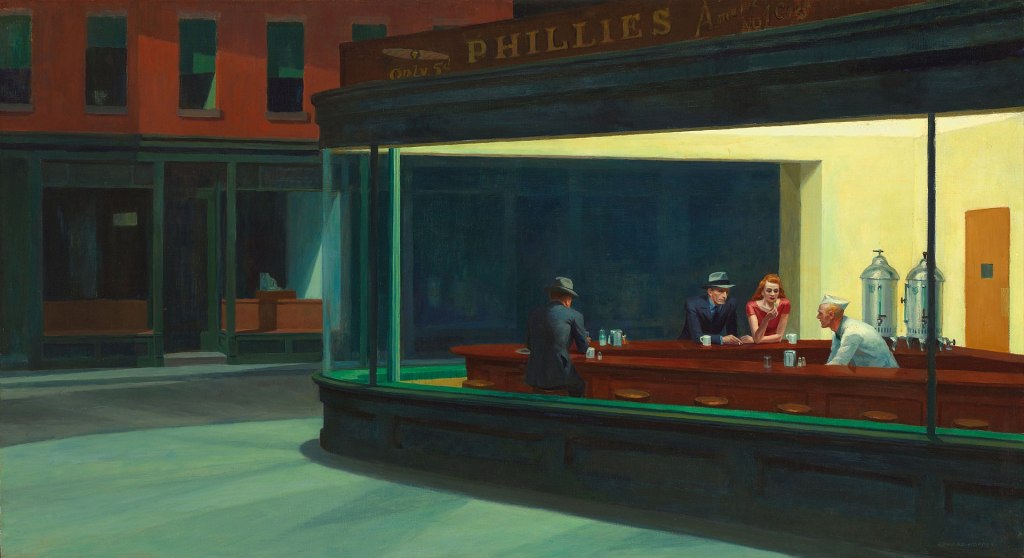
Edward Hopper’s iconic painting, “Nighthawks,” is a haunting depiction of urban alienation and solitude that continues to resonate with viewers today. Created in 1942, during the height of World War II, this evocative artwork portrays a diner illuminated by the harsh glow of fluorescent lights, with three customers and a lone waiter seemingly lost in their own thoughts.
At first glance, “Nighthawks” appears to capture a scene of ordinary city life, but upon closer inspection, its true emotional depth and complexity are revealed. The diner’s glass windows, which stretch from floor to ceiling, create a sense of transparency and exposure, as if the characters are trapped within a glass cage, isolated from the bustling city outside.
The figures in “Nighthawks” are bathed in the eerie light of the diner, their faces cast in shadow, their expressions inscrutable. The lone waiter stands behind the counter, his back turned to the customers, lost in his own world. The three customers, two men and a woman, sit at the counter, each lost in their own thoughts, their faces drawn and weary.
The mood of “Nighthawks” is one of profound loneliness and alienation, reflecting the anxieties and uncertainties of life during wartime. The empty streets outside the diner add to the sense of desolation and abandonment, as if the world has come to a standstill and time itself has frozen.
Hopper’s use of color and composition further enhances the mood of the painting. The stark contrast between light and shadow creates a sense of tension and unease, while the geometric lines and angles of the diner’s architecture add to the feeling of confinement and claustrophobia.
Despite its somber tone, “Nighthawks” is also a celebration of the human spirit and resilience. The figures may be isolated and alone, but they endure, quietly persevering in the face of adversity. In their stoic silence, they represent the indomitable spirit of the American people, resilient and unyielding in the face of hardship.
In conclusion, Edward Hopper’s “Nighthawks” is a timeless masterpiece that continues to captivate and haunt viewers with its portrayal of urban alienation and loneliness. Through its stark imagery and evocative atmosphere, the painting invites us to contemplate the isolation and solitude that can lurk beneath the surface of everyday life. As a testament to Hopper’s genius as a painter and observer of the human condition, “Nighthawks” remains a powerful and poignant reminder of the fragility and resilience of the human spirit.
Vocabulary:
- Haunting: Continuously recurring in one’s mind; evoking a strong emotional response or memory.
- Urban: Relating to a city or town; characteristic of city life.
- Alienation: Feeling isolated, estranged, or disconnected from society or one’s surroundings.
- Resonate: Evoke or suggest a strong feeling, emotion, or memory.
- Claustrophobia: Fear or discomfort in confined or crowded spaces.
- Desolation: A state of complete emptiness or loneliness; devastation or ruin.
- Isolation: Being separated from others; loneliness or detachment from society.
- Stoic: Enduring hardship or pain without complaint; showing self-control and fortitude.
- Indomitable: Impossible to subdue or defeat; unconquerable or invincible.
- Persevering: Continuing in a course of action despite difficulties or obstacles; persistent or tenacious.
- Adversity: Difficulties or misfortune; hardship or trouble.
- Transparency: The quality of being see-through or clear; openness or clarity in communication or action.
- Anxieties: Feelings of worry, nervousness, or unease about future uncertainties or potential dangers.
- Inscrutable: Difficult to understand or interpret; mysterious or enigmatic.
- Fluorescent: Emitting visible light when exposed to ultraviolet radiation; bright and glowing.
Reading Comprehension Questions:
- What is the title of the painting discussed in the article, and who is the artist?
- Describe the scene depicted in “Nighthawks” by Edward Hopper.
- How does the article describe the mood and atmosphere of the painting?
- What symbolic meanings are associated with the characters and setting in “Nighthawks”?
- What themes does the article suggest are explored in Hopper’s painting?
Conversational Questions:
- Have you ever seen Edward Hopper’s painting “Nighthawks” before? What are your impressions of it?
- How does “Nighthawks” make you feel? What emotions does it evoke in you?
- What do you think the characters in the painting might be thinking or feeling?
- How does the setting of a diner contribute to the mood and atmosphere of the painting?
- If you could step into the scene depicted in “Nighthawks,” what would you do or say?
The Lady and the Unicorn Tapestries

Article- Unraveling the Mysteries of “The Lady and the Unicorn” Tapestries
Unraveling the Mysteries of “The Lady and the Unicorn” Tapestries
“The Lady and the Unicorn” tapestries are a series of six medieval masterpieces that have intrigued and captivated viewers for centuries with their exquisite beauty and enigmatic symbolism. Created in the late 15th century, these stunning works of art are considered some of the greatest treasures of the Middle Ages, renowned for their intricate details, vibrant colors, and timeless appeal.
Each tapestry in the series depicts a noble lady accompanied by a unicorn, surrounded by various flora and fauna, as well as richly detailed millefleur backgrounds. The tapestries are known for their lush landscapes, intricate textiles, and meticulously rendered animals, all woven with the utmost skill and craftsmanship.
“The Lady and the Unicorn” tapestries are shrouded in mystery and symbolism, with interpretations varying widely among scholars and art historians. While the exact meaning of the tapestries remains open to debate, several recurring motifs and themes have been identified, including love, purity, virtue, and the senses.
The central figure in each tapestry is a noble lady, often depicted in richly embroidered gowns and elaborate headdresses, symbolizing wealth and nobility. The unicorn, a mythical creature associated with purity and innocence, is a frequent companion to the lady, often depicted as a gentle and docile creature.
One of the most intriguing aspects of “The Lady and the Unicorn” tapestries is the inclusion of various objects and animals, each with its own symbolic significance. These include flowers, birds, monkeys, lions, and rabbits, among others, all of which add layers of meaning and interpretation to the scenes.
The tapestries are also notable for their use of symbolism related to the senses, with each tapestry representing one of the five senses: sight, hearing, taste, smell, and touch. These themes are conveyed through the inclusion of various objects and activities associated with each sense, such as mirrors, musical instruments, fruits, flowers, and animals.
Despite the passage of centuries, “The Lady and the Unicorn” tapestries continue to captivate and inspire viewers with their timeless beauty and enigmatic symbolism. As a testament to the skill and artistry of the medieval craftsmen who created them, these magnificent works of art remain an enduring testament to the power of creativity and imagination.
In conclusion, “The Lady and the Unicorn” tapestries are a remarkable testament to the artistic and cultural achievements of the Middle Ages. Through their exquisite beauty, rich symbolism, and timeless appeal, these magnificent works of art continue to enchant and inspire viewers around the world, inviting us to unravel their mysteries and discover the secrets of the past.
Vocabulary:
- Tapestries: Large pieces of cloth woven with intricate designs or images, often used as wall hangings or decorations.
- Medieval: Relating to or characteristic of the Middle Ages, a period in European history from about the 5th to the 15th century.
- Exquisite: Extremely beautiful, delicate, or finely crafted; of exceptional quality.
- Enigmatic: Mysterious, puzzling, or difficult to understand; containing hidden meaning or symbolism.
- Renowned: Widely known, celebrated, or acclaimed; famous or esteemed.
- Intricate: Complicated, detailed, or complex; having many interconnected parts.
- Millefleur: A style of tapestry or textile design featuring a background covered with a dense pattern of small flowers or plants.
- Nobility: The quality or status of being noble; belonging to a social class with hereditary titles or privileges.
- Docile: Gentle, submissive, or easily trained; obedient or compliant.
- Virtue: Moral excellence or goodness; adherence to principles of morality or ethics.
- Symbolism: The use of symbols to represent ideas, concepts, or qualities; the practice of investing objects or actions with meaning beyond their literal sense.
- Interpretation: The act or process of explaining or understanding the meaning or significance of something.
- Allegorical: Using symbolic figures or representations to convey deeper meanings or truths; relating to allegory.
- Craftsmanship: Skill and artistry in creating or producing something, especially by hand; the quality of being well-made or finely executed.
- Enduring: Lasting for a long time; continuing without change or fading; enduring or persistent.
Reading Comprehension Questions:
- What are “The Lady and the Unicorn” tapestries?
- When were these tapestries created?
- What are some recurring motifs and themes found in the tapestries?
- How are the five senses represented in the tapestries?
- Why are “The Lady and the Unicorn” tapestries considered remarkable?
Conversational Questions:
- Have you ever heard of “The Lady and the Unicorn” tapestries before? What do you know about them?
- What do you think the unicorn symbolizes in the tapestries?
- If you could choose one of the tapestries to hang in your home, which one would you choose and why?
- How do you think people in medieval times would have used tapestries like “The Lady and the Unicorn” in their daily lives?
- What do you think makes these tapestries so enduringly popular and captivating?
The Mona Lisa Theft

Article- The Intriguing Story Behind the Mona Lisa’s Disappearance
The Intriguing Story Behind the Mona Lisa’s Disappearance
The Mona Lisa, with her enigmatic smile, has long been hailed as one of the most iconic and valuable paintings in the world. However, what many people may not know is that this famous masterpiece was once the target of a daring art heist that captured the world’s attention.
The theft of the Mona Lisa occurred on August 21, 1911, when the painting was stolen from the Louvre Museum in Paris, France. The thief, a former Louvre employee named Vincenzo Peruggia, managed to conceal himself inside the museum overnight and then simply walked out with the painting hidden under his coat the next morning.
Peruggia’s motive for stealing the Mona Lisa was not monetary gain but rather a misguided sense of patriotism. Believing that the painting rightfully belonged in Italy, Peruggia intended to return it to his homeland. He kept the stolen masterpiece hidden in his apartment in Paris for over two years before attempting to sell it to an art dealer in Florence, Italy.
However, Peruggia’s attempt to sell the stolen painting ultimately led to his arrest. The art dealer, suspicious of the painting’s provenance, contacted the authorities, who quickly apprehended Peruggia and recovered the Mona Lisa. The painting was returned to the Louvre in 1914, where it remains on display to this day.
The theft of the Mona Lisa captured the imagination of the public and the press, sparking widespread fascination and speculation about the motive behind the crime. The incident also highlighted the vulnerability of priceless works of art to theft and raised questions about the security measures in place at museums around the world.
In the aftermath of the theft, security at the Louvre was significantly tightened, with increased surveillance and stricter access controls implemented to prevent similar incidents from occurring in the future. The Mona Lisa itself was also given greater protection, including the installation of bulletproof glass and round-the-clock monitoring by security guards.
Despite the notoriety of the theft, many questions surrounding the incident remain unanswered. Did Peruggia act alone, or did he have accomplices? Was he truly acting out of a sense of patriotism, or was there another motive behind the crime? And what would have happened if Peruggia had succeeded in selling the Mona Lisa to the art dealer in Florence?
The theft of the Mona Lisa remains one of the most famous art heists in history, a captivating tale of intrigue, deception, and the enduring allure of a timeless masterpiece. While the painting itself may have been briefly lost to the world, its theft ultimately served to elevate the Mona Lisa to even greater heights of fame and notoriety, ensuring its place in the annals of art history for centuries to come.
The Burial of Santa Lucia – Caravaggio
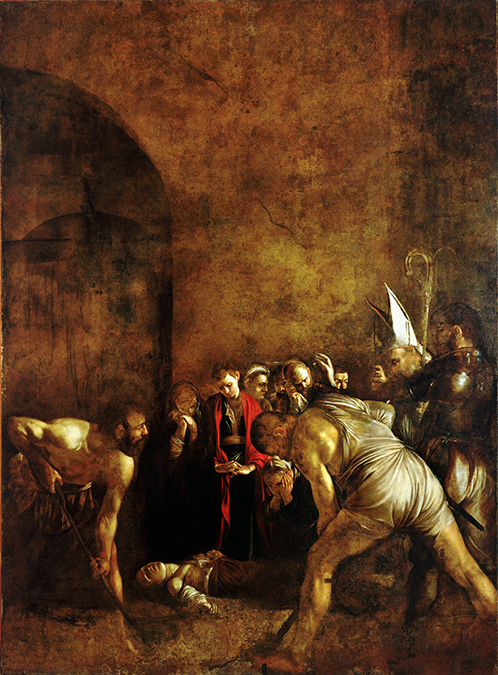
Article- Unveiling the Mystery of Caravaggio’s “The Burial of Santa Lucia”
Article: Unveiling the Mystery of Caravaggio’s “The Burial of Santa Lucia”
Caravaggio, the renowned Italian Baroque painter, left behind a legacy of enigmatic and captivating works of art. Among them, “The Burial of Santa Lucia” stands out as a masterpiece that not only showcases Caravaggio’s exceptional talent but also encapsulates the essence of the Baroque period.
Painted in 1608, “The Burial of Santa Lucia” depicts the solemn moment of the burial of Saint Lucia, a Christian martyr from Syracuse, Sicily, who lived in the 3rd century AD. Legend has it that Lucia, a young Christian, consecrated herself to God and refused to marry a pagan suitor. In retaliation, the suitor accused her of being a Christian to the Roman authorities. Despite attempts to force her into submission, Lucia remained steadfast in her faith, ultimately meeting her martyrdom by having her eyes gouged out before being killed. She became the patron saint of the blind, among others.
Caravaggio’s rendition of this narrative is both powerful and poignant. The composition is striking in its simplicity, with the focal point being the lifeless body of Saint Lucia, wrapped in white burial shroud, surrounded by grieving figures. Caravaggio’s masterful use of chiaroscuro, the interplay of light and shadow, imbues the scene with a sense of drama and emotional depth.
One of the most intriguing aspects of “The Burial of Santa Lucia” is the ambiguity surrounding the identity of the figures in the painting. While some art historians suggest that Caravaggio himself may have portrayed Saint Lucia, others argue that the figure lying on the bier might be a symbolic representation of the saint, with the true identity left deliberately ambiguous. This ambiguity adds layers of interpretation to the artwork, inviting viewers to contemplate the meaning behind Caravaggio’s choice.
Furthermore, Caravaggio’s portrayal of Saint Lucia’s burial deviates from traditional iconography. Rather than depicting the saint surrounded by heavenly beings or divine manifestations, Caravaggio opts for a more human-centric approach, emphasizing the raw emotion and human drama of the moment. This departure from convention is characteristic of Caravaggio’s innovative style, which often challenged artistic norms of his time.
Despite the passage of centuries, “The Burial of Santa Lucia” continues to captivate viewers with its timeless beauty and profound symbolism. Through his masterful brushwork and emotive portrayal of the human experience, Caravaggio invites us to reflect on themes of faith, martyrdom, and the triumph of the spirit over adversity.
Vocabulary:
- Renowned – Famous and respected.
- Baroque – A style of European art, music, and architecture from the 17th century characterized by elaborate detail and dramatic expression.
- Masterpiece – A work of outstanding artistry, skill, or workmanship.
- Martyr – A person who is killed because of their religious or other beliefs.
- Consecrated – Dedicated to a sacred purpose.
- Pagan – A person holding religious beliefs other than those of the main world religions; often polytheistic.
- Suitor – A man who pursues a relationship with a particular woman, with the aim of marriage.
- Authorities – People or organizations having power or control in a particular, typically political or administrative, sphere.
- Steadfast – Firm and unwavering.
- Bier – A frame or stand on which a corpse or the coffin containing it is laid before burial.
- Chiaroscuro – The use of strong contrasts between light and dark to give the illusion of volume in modeling three-dimensional objects and figures.
- Ambiguity – Uncertainty or inexactness of meaning in language or art.
- Interpretation – The action of explaining the meaning of something.
- Iconography – Visual images, symbols, or modes of representation collectively associated with a person, cult, or movement.
- Innovative – Introducing new ideas; original and creative in thinking.
- Composition – The arrangement of elements in a work of art.
- Emotive – Arousing or able to arouse intense feeling.
- Profound – Very great or intense; having deep insight or understanding.
- Symbolism – The use of symbols to represent ideas or qualities.
- Faith – Complete trust or confidence in someone or something, often referring to religious belief.
Reading Comprehension Questions:
- When was “The Burial of Santa Lucia” painted?
- Who was Saint Lucia, and what is she known for?
- Describe the composition of the painting.
- What is chiaroscuro, and how does Caravaggio use it in the painting?
- How does Caravaggio’s portrayal of Saint Lucia’s burial differ from traditional iconography?
Conversational Questions:
- What emotions does Caravaggio evoke through his portrayal of the figures in “The Burial of Santa Lucia”?
- Why do you think Caravaggio chose to depart from traditional iconography in this painting?
- How does the ambiguity surrounding the identity of the figures contribute to the interpretation of the artwork?
- Do you believe Caravaggio’s innovative style was well-received during his time, considering his deviations from artistic norms?
- What parallels can you draw between the themes depicted in “The Burial of Santa Lucia” and contemporary societal issues?
More Coming Soon…
More Coming Soon….
 My English Place